
Trapped passengers|Known only when residents call
The risk is building
Know before residents complain
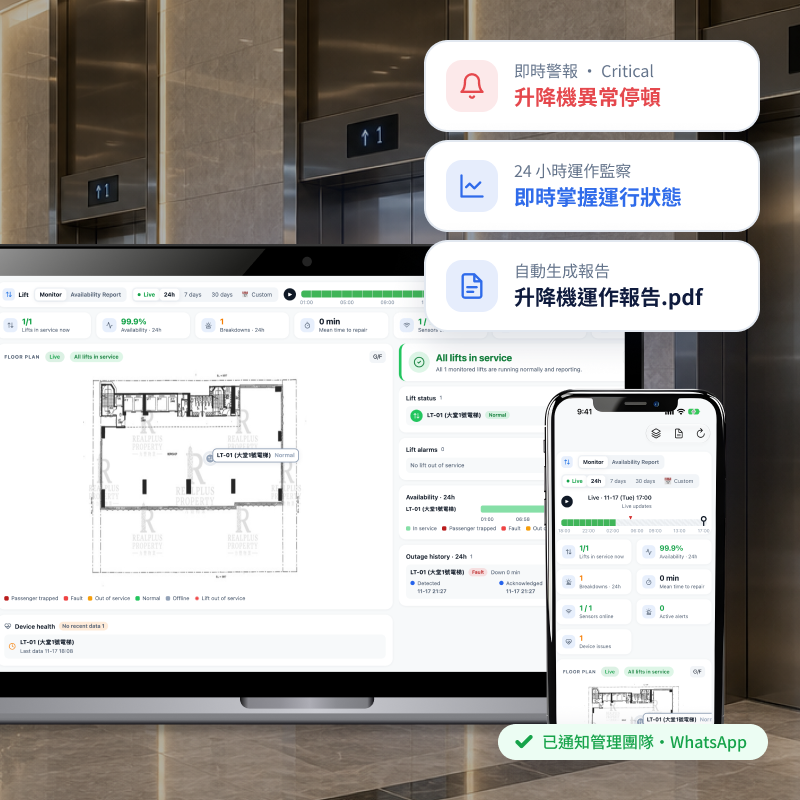
Wireless sensors watch door movement, travel, vibration and power status. Abnormal stoppages or trapped passengers instantly alert the contractor and management office, with every downtime and response time recorded.
Powered by SenseOS|Engineering-grade deployment with 3,000+ devices connected locally
Published Updated
At a glance
SenseOS lift monitoring uses wireless sensors to watch lift door movement, travel, vibration and power status, and instantly alerts the contractor and management office on abnormal stoppages or trapped passengers, so you no longer depend on residents calling in. The system is an independent monitor and recorder that never interferes with the lift control system or statutory maintenance. Downtime, fault counts and response times are recorded automatically into reports for reviewing contractor performance. Web and mobile app views stay in sync, with multiple recipients and schedules supported. It suits residential lifts, commercial building lifts, service and goods lifts, car park lifts and escalators.
When a lift has a problem, you often only hear about it when a resident calls.
Trapped passengers|Known only when residents call
Repeat faults|No data to hold the contractor accountable
Downtime|No real figures to point to
No hardware to buy upfront. Open an account online to simulate operation, then connect physical devices once you are happy.
01
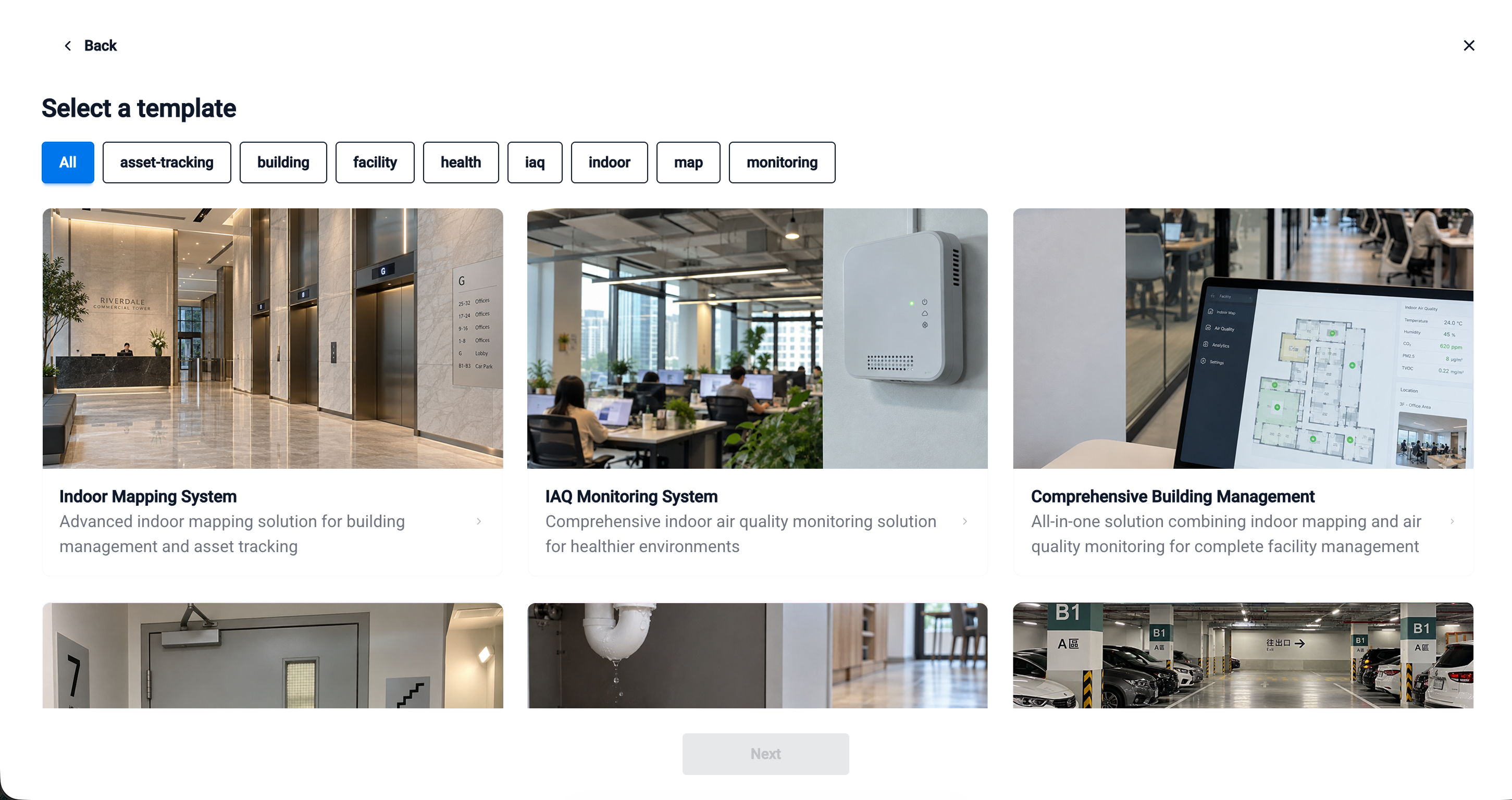
Sign up|Create your own space in 1 minute
Create a free SenseOS account online and draw your own floor or meeting-room plan. No waiting for quotes or site visits.
02
Simulate|Test data flow with zero hardware
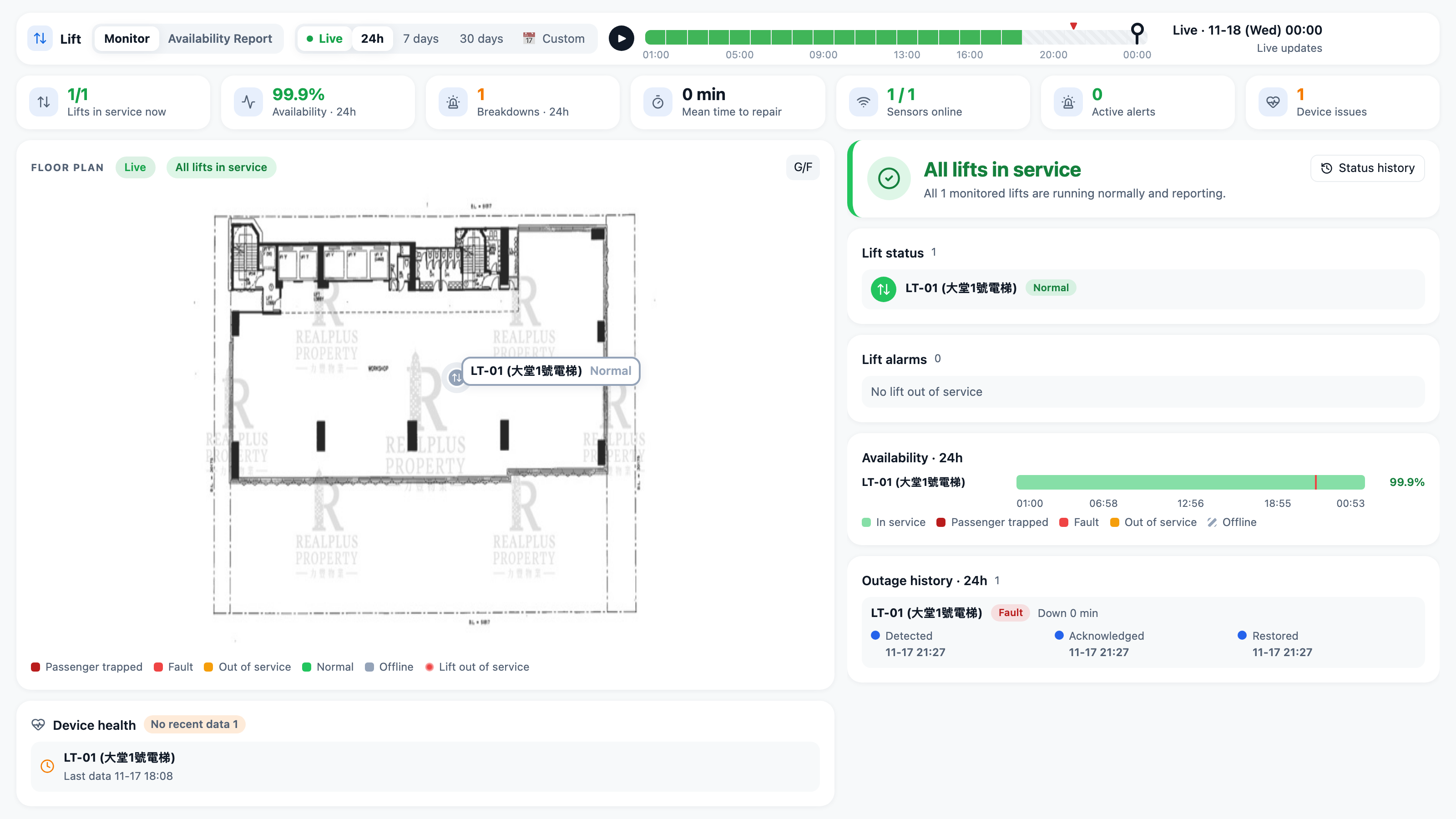
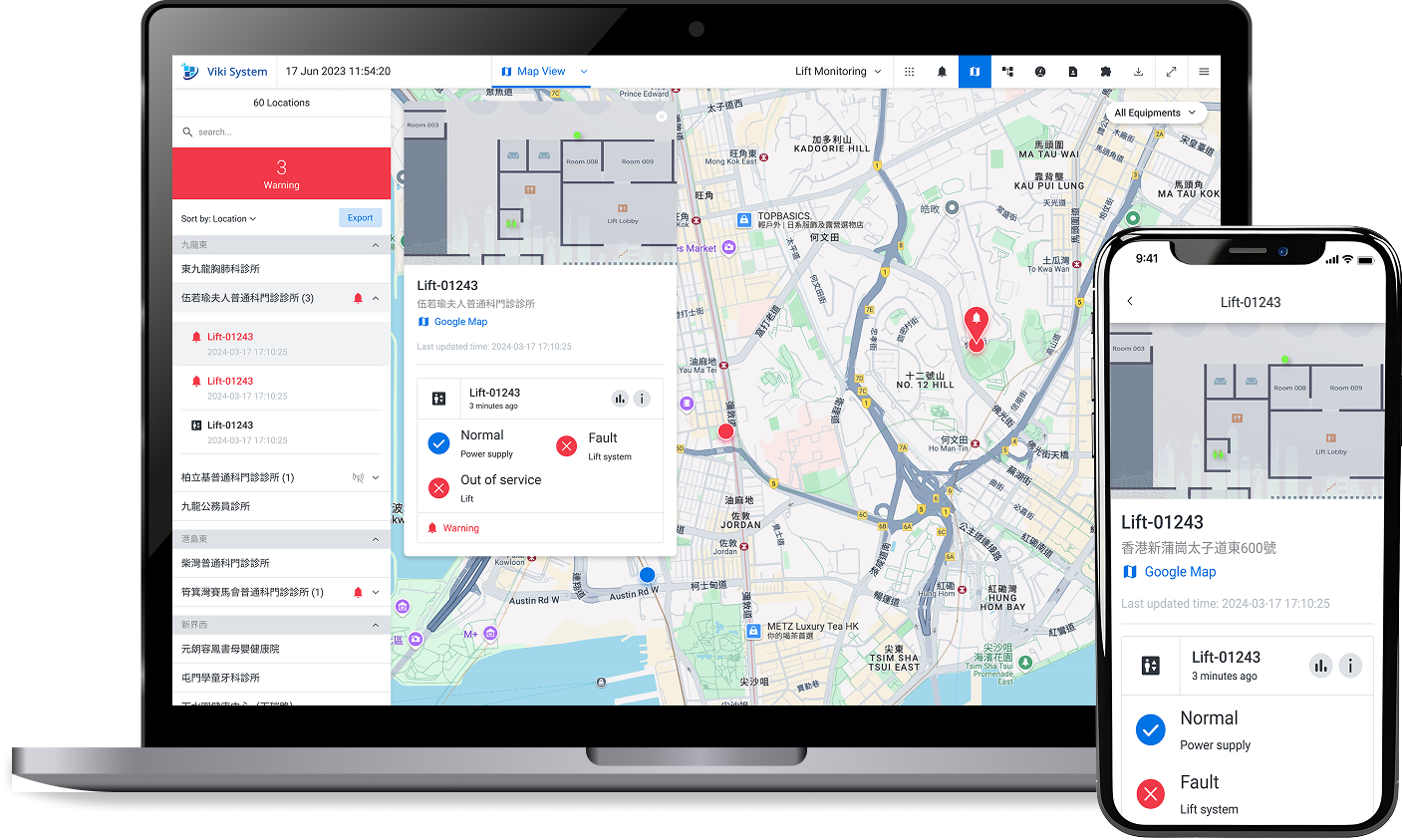
Built-in virtual lift monitoring simulates the normal, fault, passenger-trapped and out-of-service status of each lift, so you can preview the real monitoring screens, including lift locations on the floor plan, lift status and alarm lists, 24-hour availability, outage history and device health.
03
Manage|Set up alerts and automatic reports
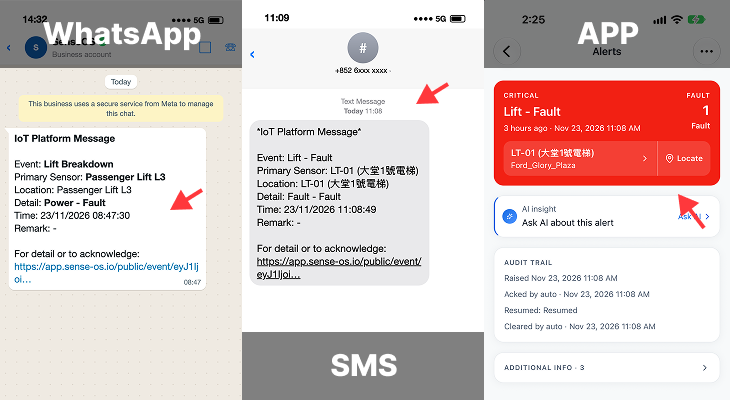
Get instant threshold alerts (WhatsApp / email / SMS). The system also saves all historical data automatically, so you can review or export records any time and experience the full management workflow.
04
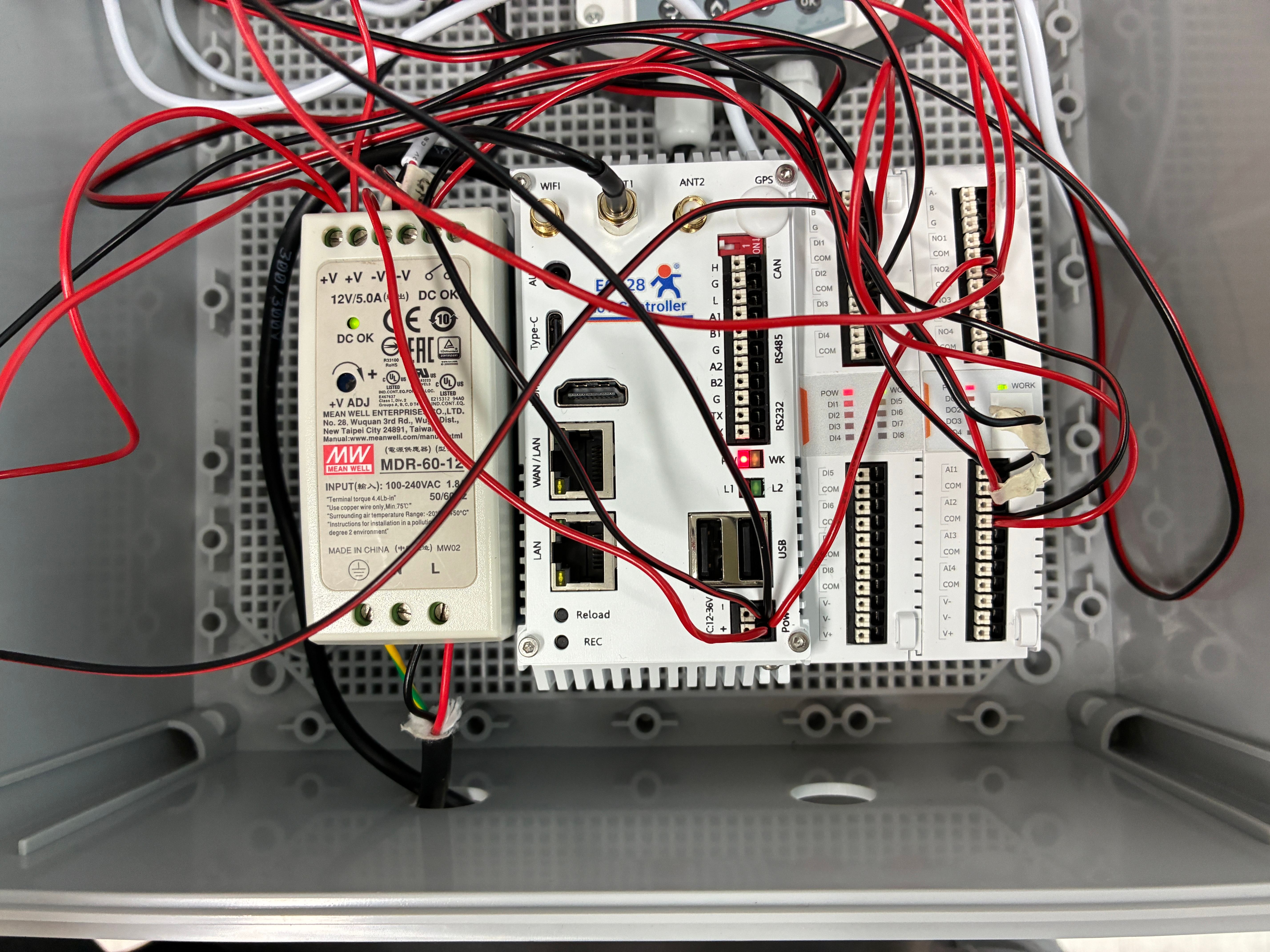
Connect|Add physical sensors when you need them
Once the platform fits your needs, buy wireless sensors or connect existing systems. Plug in and switch over seamlessly.
Web and mobile views stay in sync, showing each lift’s status, fault count, downtime and response time at a glance. Reports can be used to review contractor performance. Add more monitoring applications to SenseOS later without building another system.
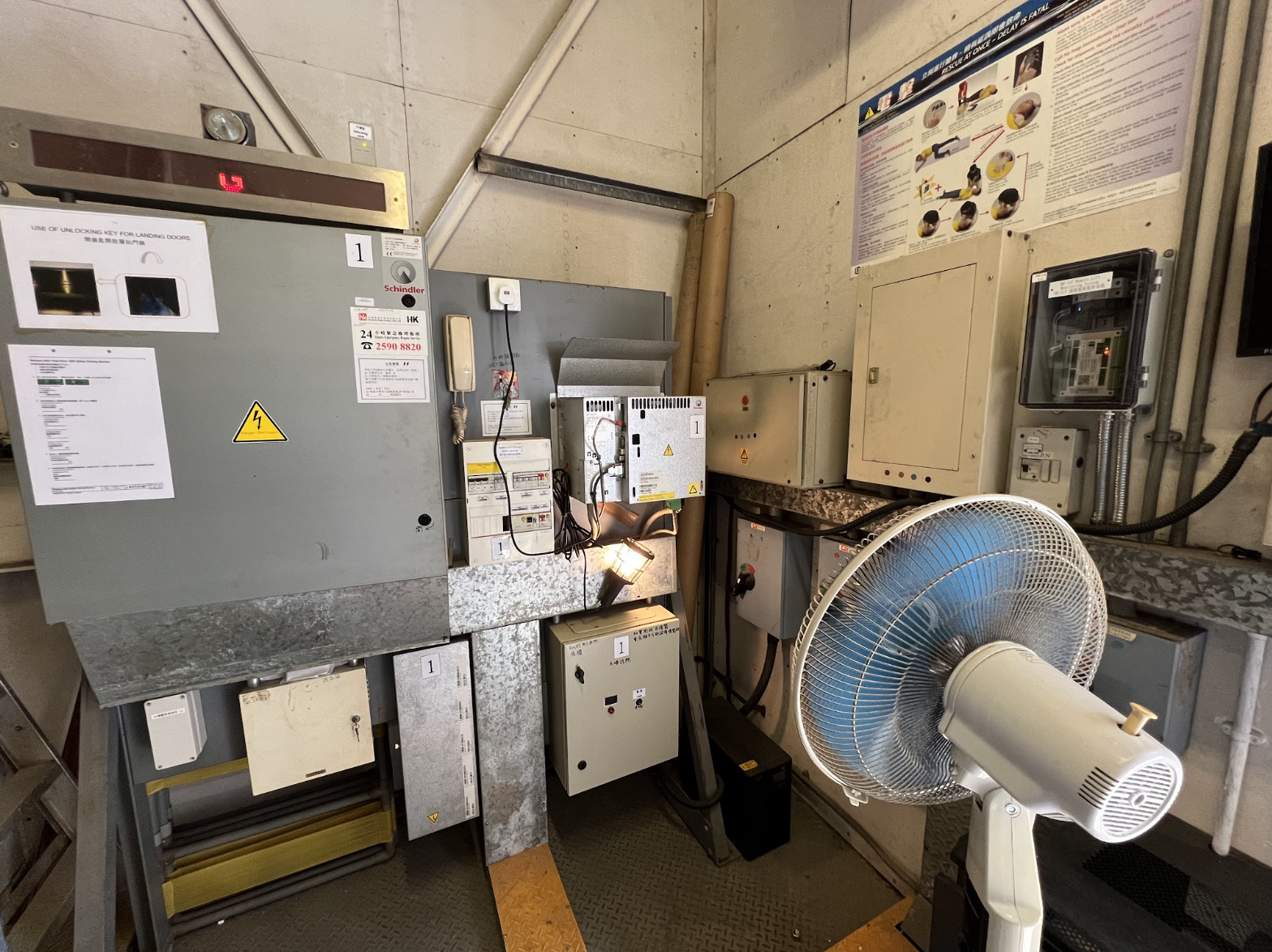
Customer example
Noticeably shorter response time to trapped-passenger incidents
About half a day per lift. No changes to the lift control system are needed, and statutory maintenance is not affected.
Around two years in normal use. The platform and app remind you when battery levels are low, so sensors never fail silently.
No. The system is an independent monitor and recorder and never interferes with the control system.
Historical data is stored in the cloud and can be viewed at any time or exported as Excel or PDF reports.
Set multiple recipients and schedules to notify the contractor, management office and security at the same time.
Yes. API integration with existing property management or monitoring platforms is supported, or it can run independently without replacing existing equipment.
Based on the number of lifts and service period, including installation, platform use and support, quoted after a site assessment.
Local support is available during office hours, with free replacement during the hardware warranty.
Extend the same SenseOS platform to more building management scenarios.
Bring fire and security alarms into one platform with instant alerts, without replacing panels.
Learn moreInstant alerts when an emergency exit is opened or left ajar.
Learn moreDetect leaks early to limit water damage and repair costs.
Learn moreWhy Viki System
Viki System Limited is a Hong Kong IoT engineering company. Our local team builds and maintains the SenseOS platform in-house, and we handle hardware selection, on-site installation, platform integration and ongoing support, so you deal with a single supplier.
100% locally developed
SenseOS is built in Hong Kong by a team that knows local regulations, with no waiting on overseas vendors.
End-to-end delivery
Hardware selection, installation by our local engineers, integration and testing from one supplier.
EMSD
2,000+devices monitored, custom-built for EMSD
Real-time monitoring and automatic alerts across 1,800+ traffic lights, 200+ pumps and 600+ lifts.
MTR
1,000+track access gates monitored 24/7
Instant alerts on unauthorised opening, reducing unauthorised track access.





Have a question or want to book a consultation? Fill in the form below and we will get back to you shortly.
Address
Room B, 20/F, Ford Glory Plaza, 37 Wing Hong Street, Cheung Sha Wan, Kowloon
(Lai Chi Kok MTR Station, Exit C)
Phone
3956-1190Website
www.vikisys.com